
Is Nocatee a Good Place to Live for Families?
Nocatee is a good place to live for families who want top-ranked St. Johns County schools, extensive amenities and newer construction, and who can carry CDD and HOA assessments on top of a mortgage. Those assessments add roughly $300 to $500 a month for most households. Families needing a short downtown Jacksonville commute or a lower monthly payment generally do better elsewhere in the county.
- Median sale price: published medians cluster between about $662,000 and $690,000 as of August 2026, with prices down modestly year over year
- CDD assessments: $1,315 to $3,539 per year on the St. Johns County side for FY2026, depending on village and lot width
- Schools: three K–8 academies feeding Allen D. Nease High School, in Florida’s top-ranked district
- Commute: roughly 25 to 45 minutes to downtown Jacksonville and 10 to 20 minutes to the beaches, depending on village and time of day
- Size: more than 13,000 acres and dozens of distinct villages, with over half the land held as conservation
Who is Nocatee actually a good fit for?
Nocatee works best for families who will use what they are paying for. The assessments that fund the water parks, trails and Town Center are charged whether a household visits them weekly or never. A family with elementary-age children who bike to the pool most weekends extracts real value from that structure. A couple who works long hours and travels most weekends is paying a premium for infrastructure they rarely touch.
The second qualifier is school priority. St. Johns County is the top-ranked public district in Florida, with district-wide math proficiency around 73 percent against roughly 52 percent statewide, and reading close to 72 percent against a similar state figure. Families who rank schools first and are relocating from out of state tend to find the premium justifiable. Families who would use private school anyway are paying twice for the same priority.
The buyers who most often regret it are the ones stretched to their approval limit. Nocatee’s monthly cost is not the mortgage alone, and a household approved at the top of its range on a payment that ignores CDD and HOA will feel that gap every month. The same budget frequently buys more house, with lower carrying costs, in other parts of St. Johns County — with the trade-off being the amenities and, in some cases, a different school zone.
What do families get for the money?
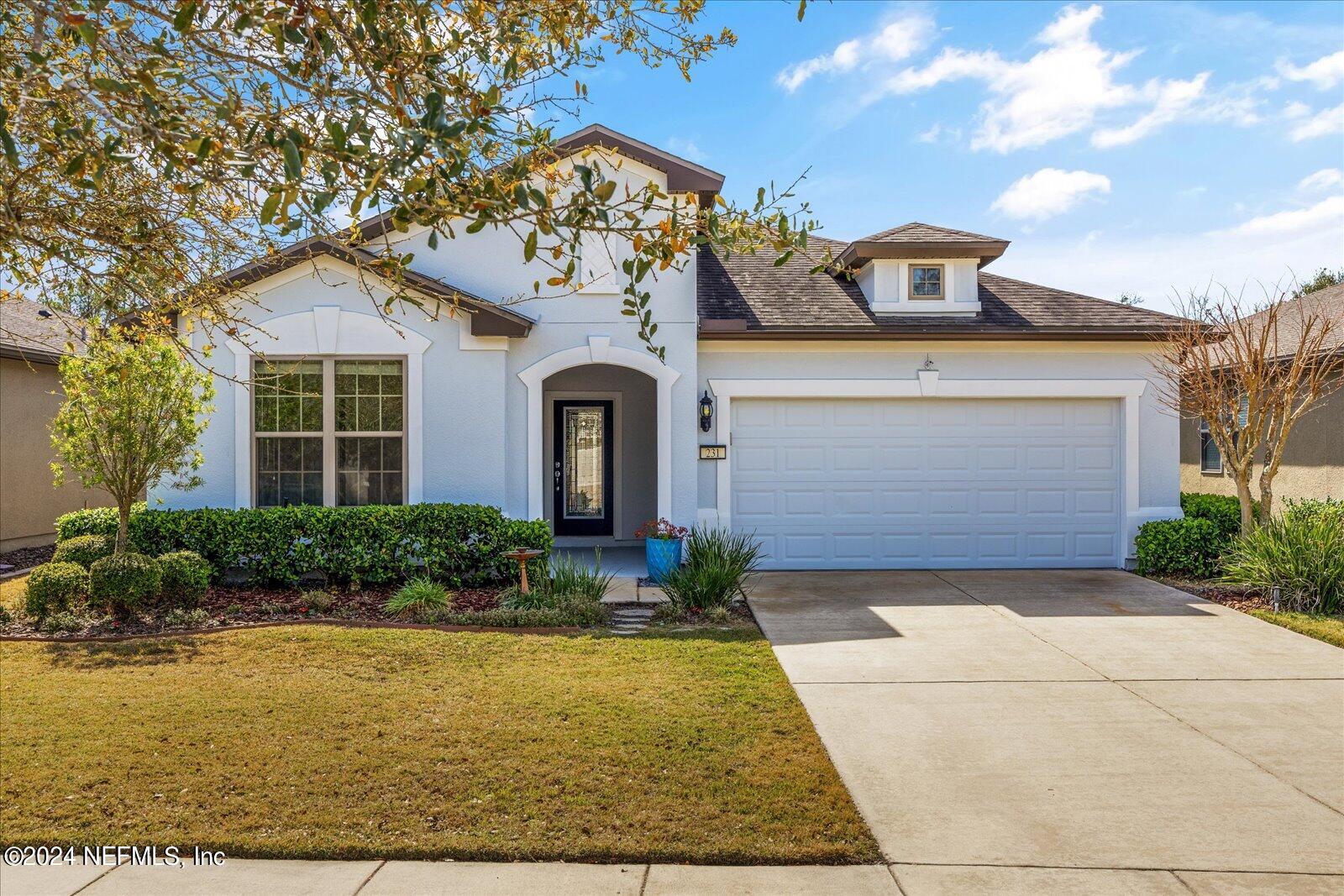
The amenity package is the reason most families tour Nocatee in the first place. It includes the Splash and Spray water parks, an extensive Greenway trail system, a Town Center with a Publix and restaurants, Crosswater Hall, fitness facilities, tennis and pickleball courts, playgrounds and a dog park. A YMCA and a fire and EMS station sit inside the development.
The design detail that matters most day to day is golf-cart connectivity. Villages are linked to the Town Center, schools and parks by cart-accessible paths, which changes how families move around — a twelve-year-old can reach the pool or a friend’s house without a parent driving. That is a genuine difference from a conventional subdivision, and it is the feature residents cite most consistently.
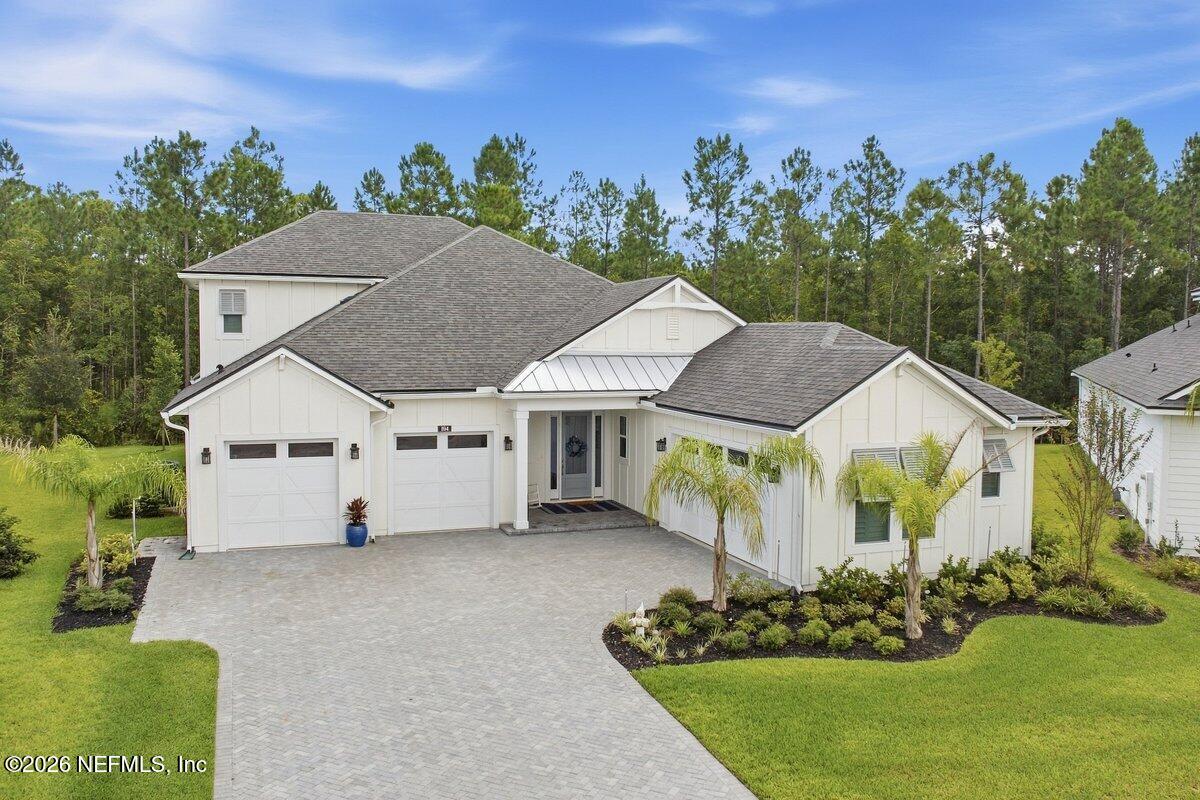
Housing stock is newer than the metro average, which carries practical consequences: post-2018 HVAC efficiency standards, hurricane-rated windows and modern wiring in most homes. Repair exposure in the first years of ownership is generally lower than in an older Jacksonville neighborhood at a comparable price.
What does it really cost to live in Nocatee each month?
Two charges sit on top of a Nocatee mortgage, and they are not the same thing. The CDD assessment repays the municipal bonds that financed the community’s roads, drainage and amenities, and appears on the annual property-tax bill as a non-ad-valorem line. HOA dues are billed separately by each village association and cover daily operations, landscaping and covenant enforcement. Buyers relocating from outside Florida routinely conflate the two and underestimate their carrying cost as a result.
St. Johns County CDD assessments in Nocatee ran from $1,315 to $3,539 per year in FY2026, varying by village, lot width, product type and bond series. The smaller Duval County portion ran from about $1,786 to $2,197. For a concrete example at the higher end, River Landing at Twenty Mile publishes annual CDD assessments of roughly $3,285 to $3,446 depending on homesite width, alongside $2,772 in yearly HOA dues.
Modeled monthly cost on a median-priced Nocatee home
| Principal and interest | about $3,540 |
|---|---|
| Property tax | about $690 |
| Home insurance | about $335 |
| CDD assessment | about $200 |
| HOA dues | about $150 |
| Estimated total | about $4,915 per month |
Illustration, not an actual closing. Assumes a $665,000 purchase, 20 percent down, a 7 percent 30-year fixed rate, St. Johns County millage near 13.5 with the homestead exemption applied, and mid-range CDD and HOA figures. Your numbers will differ by village, rate and insurer.
The useful way to read that table is the bottom two lines. CDD and HOA together add roughly $350 a month, which at a 7 percent rate is equivalent to carrying about $52,000 in additional mortgage. A family comparing a Nocatee home against a $600,000 home elsewhere in St. Johns County with lower assessments is not comparing a $65,000 price gap — the effective gap is closer to $117,000. That single calculation reframes most Nocatee affordability conversations.
Florida home insurance premiums vary sharply by county and coastal exposure and move faster than any other line in this table. Get a real quote on a specific address before you rely on any estimate, including this one.
Which Nocatee neighborhoods fit which budgets?
Nocatee is not one neighborhood. It is dozens of villages, and the village drives price, lot size, school zoning and even internal drive time far more than the Nocatee name does.
| Budget | Villages to look at | Who it suits |
|---|---|---|
| Under $500K | Greenleaf Village and Greenleaf Lakes ($380K–$550K); townhomes and villas in the Town Center core, including West End, Lakeside and Daniel Park | First-time buyers and smaller families who want the amenities and school zoning at the lowest entry point, and will accept less square footage and yard |
| $500K–$700K | Willowcove ($450K–$650K), Beachwalk ($475K–$700K), portions of Seabrook | The core family band. Established sections with full-size single-family homes; Beachwalk adds its own lagoon amenity and a higher fee structure |
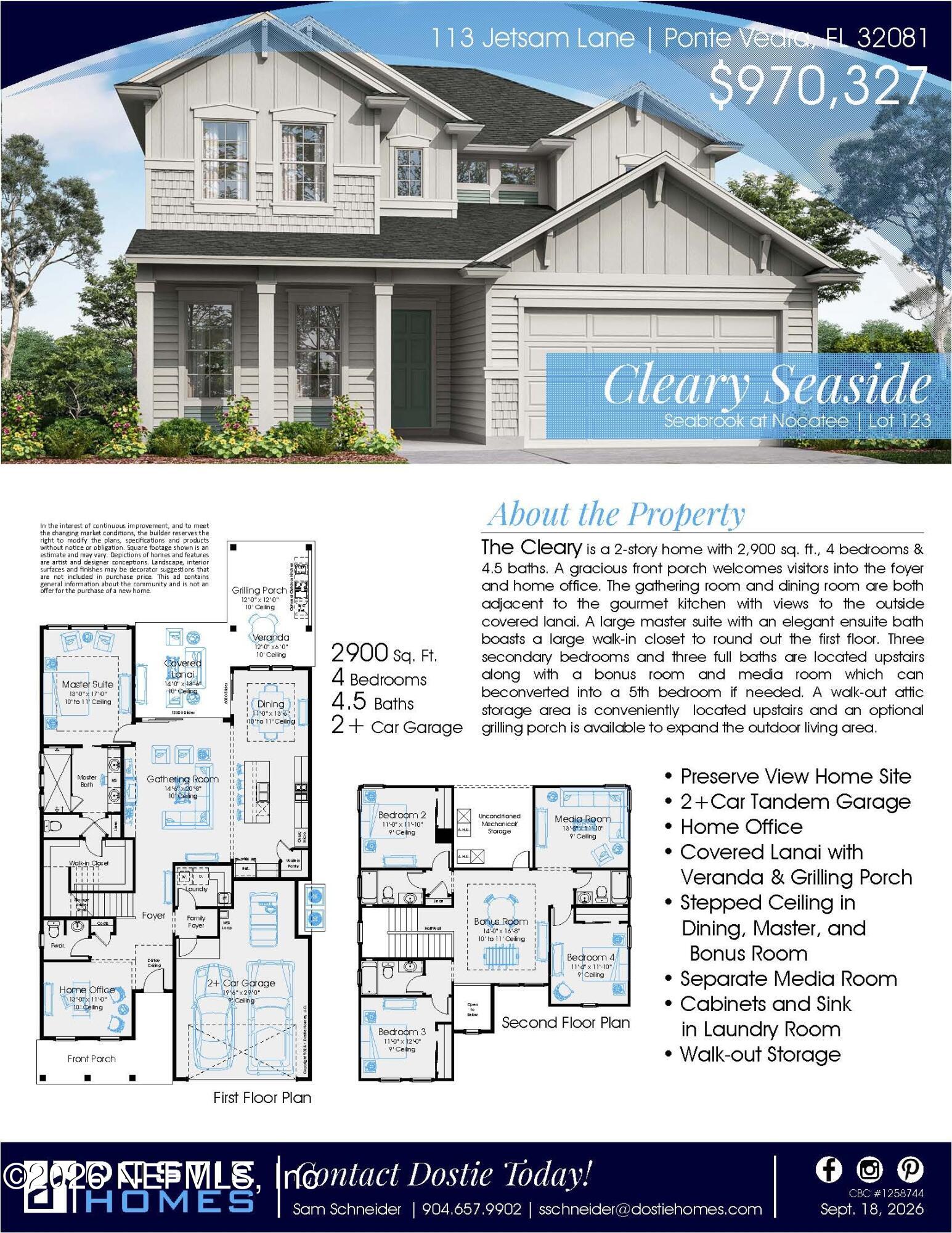
| $700K–$1M | Twenty Mile ($550K–$900K) and its sub-neighborhoods, including Kelly Pointe and Oakwood; much of Seabrook Village | Move-up families wanting larger lots and the preserve setting near the Intracoastal |
| $1M+ | Coastal Oaks (gated, mid-$700s to over $2M), River Landing at Twenty Mile, The Pointe at Twenty Mile | Buyers wanting gated privacy, larger custom homesites, waterfront, or neighborhood-only amenity centers on top of the shared Nocatee network |
Price bands reflect 2026 village-level ranges; confirm current pricing on any specific home.
One clarification that saves families a wasted tour: Del Webb Nocatee and Riverwood are 55-and-over active adult communities inside the development. They appear in Nocatee price searches and look like value at $350,000 to $580,000, but they are age-restricted and not available to households with children.
What schools do Nocatee children attend?
Nocatee villages in St. Johns County feed three K–8 academies — Palm Valley, Pine Island and Valley Ridge — which in turn feed Allen D. Nease High School. Some villages are assigned to Ponte Vedra High School instead. The small northern portion of the development that sits in Duval County is zoned entirely differently, to Duval County schools.
Zoning here is not stable, and that is the part families most often miss. For the 2026/27 school year the district moved several Seabrook-area villages — including Seabrook Village, Reflections at Seabrook, Anthem Ridge, Pioneer Village and Franklin Square — to a new K–7 academy, with eighth grade assigned to Pine Island Academy. Boundaries have been redrawn repeatedly as the northeast corner of the county has grown, and Nease has historically run above its design capacity.
The practical implication: a family buying primarily for a specific school assignment should treat the current zone as accurate today rather than guaranteed for twelve years. Confirm the assignment for the exact address with the district before writing an offer, and do not rely on a neighborhood list, including this one.
How long is the commute from Nocatee?
| Destination | Typical drive |
|---|---|
| Downtown Jacksonville | 25–45 minutes |
| Ponte Vedra and area beaches | 10–20 minutes |
| St. Augustine | 25–35 minutes |
Published estimates as of 2026. Times vary widely by village and time of day.
The spread on the downtown figure is real rather than sloppy: published sources disagree, some citing 25 to 35 minutes and others 35 to 45. Both are defensible, because a home in a northern Town Center village at 6:30am and a home in a far southern village at 8:00am are genuinely different commutes.
The Nocatee Parkway carries most traffic in and out and moves well outside peaks. Congestion concentrates in the school-bell windows, roughly 7:15 to 8:15 in the morning and 2:30 to 3:30 in the afternoon, and along the US-1 approach to I-95 during morning rush. Any family with a fixed office schedule should drive their actual route, from the actual village, at their actual departure time, before making an offer.
What do families wish they’d known before moving to Nocatee?
- CDD and HOA are separate charges. Out-of-state buyers regularly treat them as one line and discover the real monthly cost after closing.
- Amenities get crowded. The water parks and pools draw heavy use on hot weekends and during school breaks. The infrastructure is excellent; it is also shared with a community of tens of thousands.
- School assignment can change. Several villages were rezoned for 2026/27 as a new academy opened. More campuses are likely as the area fills in.
- Home insurance is the volatile line. Florida premiums run well above the national average and swing the true cost of living more than groceries or utilities ever will.
- The community is near build-out. Buyers who assumed continued new-construction appreciation are now in a market shifting toward resale competition.
- The golf carts are not a gimmick. This is the surprise that goes the other way — families consistently report that cart connectivity changed their children’s independence more than any single amenity did.
What are the biggest drawbacks of living in Nocatee?
- Price. Nocatee’s median sits roughly double the Jacksonville metro median, which was around $325,000 in spring 2026. The premium is real and it prices out many local buyers.
- Resale competition at build-out. With new construction winding down, sellers increasingly compete against near-identical homes in the same village, which compresses pricing power.
- Internal traffic at peaks. The parkway is well engineered, but school-bell windows and the US-1 corridor both bottleneck predictably, and the effect is worse from the southern villages.
- Architectural sameness. The coastal-transitional standard is attractive and consistently executed. It is also consistent to the point that many streets read as interchangeable, which matters to some buyers a great deal and to others not at all.
- Zoning uncertainty. Buying for a school zone carries more risk here than in a built-out area with stable boundaries.
- The Duval County slice. A small northern portion falls outside St. Johns County, which changes both the tax picture and the school assignment. Verify the county on any specific address.
So is Nocatee worth it for your family?
Nocatee is worth the premium when three conditions hold: your children are young enough to use the amenities for years rather than months, public school is your plan rather than a fallback, and the all-in monthly payment including CDD and HOA leaves you comfortable rather than stretched.
It is the wrong choice in two situations. If your commute is downtown and fixed at rush hour, you will pay a premium every workday for a location that does not serve your daily life. And if the CDD and HOA are what push the payment past your comfort, the right answer is a different St. Johns community rather than a smaller Nocatee house — the assessments follow the address, not the square footage.
Figures sourced from the Tolomato CDD FY2026 assessment lookup, St. Johns County School District zoning, NEFAR and third-party listing data. Current as of September 8, 2026.
Common Questions
Frequently Asked Questions
Ready to Make Your Move?
Let DJ & Lindsey Help You Find Your Dream Home
Whether you're buying, selling, or just exploring your options, we're here to guide you every step of the way. With deep local expertise across Florida's best markets, we'll help you make the smartest real estate decisions.
Get In Touch
Free Consultation
"*" indicates required fields