

Pool Homes in Orlando: A 2026 Buyer’s Guide
If you are searching for pool homes in Orlando, the pool itself deserves almost as much due diligence as the house.
A private pool can be a major part of the Central Florida lifestyle, but two otherwise similar homes can have very different ownership costs depending on the pool’s age, surface, equipment, screen enclosure, heating system, safety features and insurance requirements.
The Orlando area also has a wide variety of pool-home settings, from established neighborhoods in Dr. Phillips and Winter Park to newer communities in southeast Orlando, Horizon West and surrounding Central Florida.
This 2026 buyer guide explains where to look, what to inspect, what Florida pool-safety rules actually require and how to compare the total cost of owning a home with a private pool.
For a broader look at the metro, visit our Orlando real estate and neighborhoods guide.
Why Buyers Look for Pool Homes in Orlando
Central Florida’s climate allows homeowners to use outdoor living areas during much of the year, particularly when a pool is heated.
A private pool can also change how the backyard functions by creating space for:
- Swimming
- Outdoor entertaining
- Covered or screened patios
- Outdoor kitchens
- Spas
- Sun decks and lounging areas
But a pool should be evaluated as an improvement with ongoing maintenance requirements rather than assumed to be an automatic financial advantage.
Do Pool Homes Cost More in Orlando?
Sometimes, but there is no reliable Orlando-wide percentage premium for a private pool.
The value of a pool depends on factors such as:
- Neighborhood
- Home price
- Lot size
- Pool age
- Condition
- Pool size
- Screen enclosure
- Heater
- Spa
- Outdoor kitchen
- Decking
- Recent renovations
Instead of assuming a pool adds a fixed amount to the home’s value, compare the property with recent sales of similar homes with pools in the same neighborhood.
A well-maintained pool with newer equipment may be materially different from one approaching major resurfacing or equipment replacement.
Where Can You Find Pool Homes Around Orlando?
Private pools appear throughout the Orlando metro, but buyers often encounter them in areas with established single-family housing, larger lots or higher-priced detached homes.
Dr. Phillips
Dr. Phillips contains a large amount of established single-family housing, including gated communities and properties with private pools.
Housing can range from conventional subdivision homes to larger luxury residences.
Buyers should remember that Dr. Phillips is generally an unincorporated Orange County community rather than a separate incorporated city.
Our Windermere and Dr. Phillips neighborhood guide provides more detail on the area.
Windermere
Windermere and the surrounding southwest Orange County market include everything from older single-family neighborhoods to gated luxury communities and lakefront estates.
Private pools are common enough in this part of the market that buyers can often compare several pool and non-pool properties within the same broader search area.
Make sure you distinguish between properties actually inside the Town of Windermere and surrounding homes that use a Windermere mailing address.
Winter Park
Winter Park has a large inventory of established single-family homes, including renovated older properties, lakefront homes and newer infill construction.
Some properties have pools that were added decades after the original house was constructed, making permit history and equipment age particularly important.
Baldwin Park
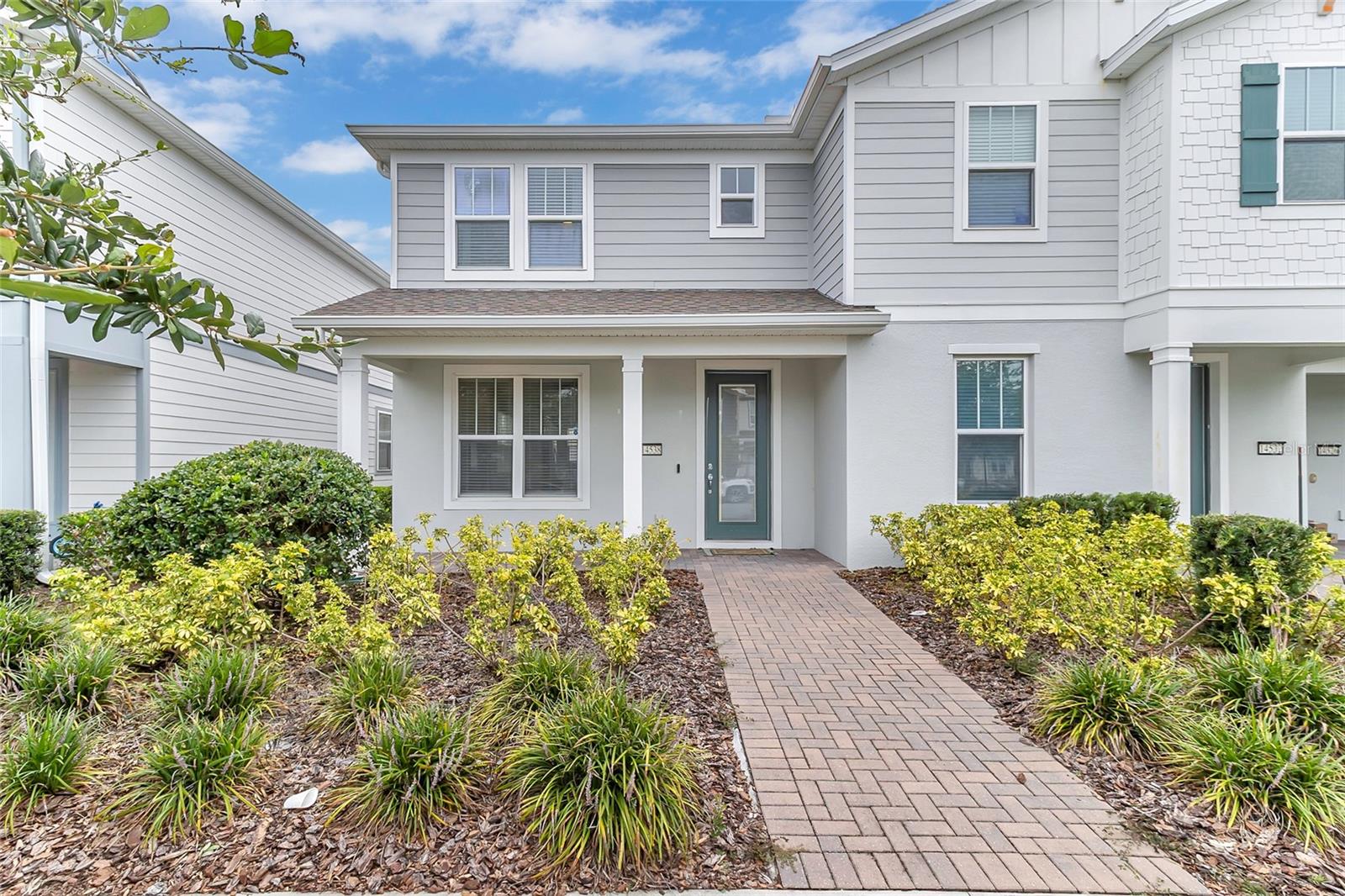
Baldwin Park contains detached homes, townhomes and condos within a master-planned Orlando neighborhood.
Some single-family properties include private pools, although many residents also have access to association amenities.
Our Baldwin Park buyer guide covers the neighborhood in more detail.
Lake Nona and Southeast Orlando
Southeast Orlando and the broader Lake Nona area contain newer housing alongside established communities.
Private-pool availability varies significantly by subdivision, lot size and builder.
Do not assume every newer home can accommodate a future pool. Review:
- Lot dimensions
- Setbacks
- Easements
- HOA architectural rules
- Impervious-surface limitations
- Drainage requirements
Winter Garden and Horizon West
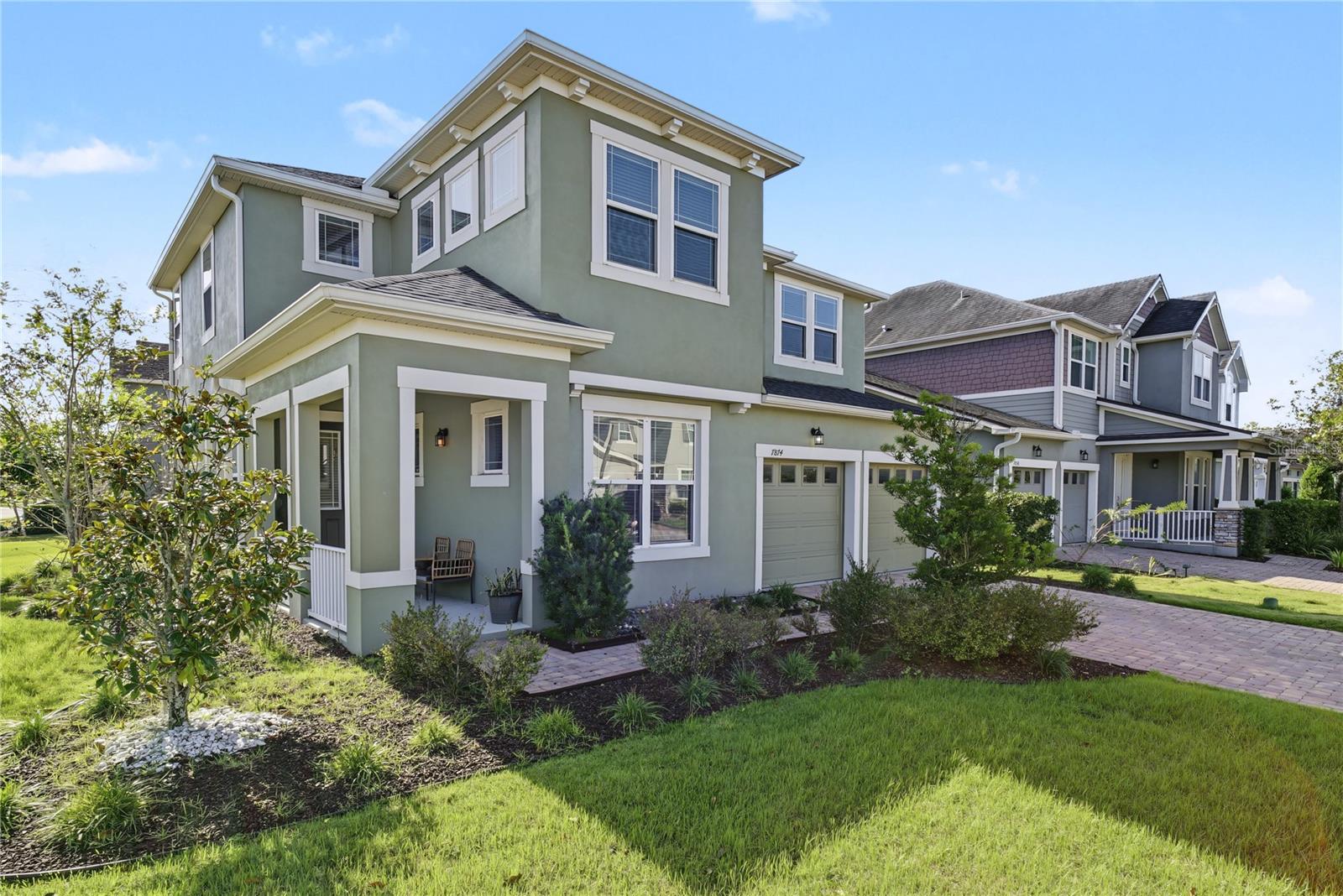
Southwest Orange County also has significant newer single-family inventory.
Some homes were built with pools, while others may have enough yard space for a future installation.
Horizon West is largely in unincorporated Orange County, even when a property may use a Winter Garden mailing address, so permit jurisdiction should be verified for the specific parcel.
Search Orlando Pool Homes Carefully
Property-search filters are useful, but listing data is not always consistent.
A listing marked “pool” might refer to:
- Private backyard pool
- Community pool
- Private pool plus spa
- Unscreened pool
- Screened pool
Read the listing details and verify that the pool is actually private if that is a requirement.
You can browse Orlando homes with private pools or use our broader home search to compare surrounding Central Florida markets.
What Should You Inspect Before Buying a Pool Home?
A standard home inspection may include a general pool review, but buyers should ask what is actually covered.
For a more detailed evaluation, a pool contractor or specialist may be appropriate.
Pool Surface
Inspect the interior finish for:
- Cracking
- Delamination
- Rough areas
- Staining
- Exposed aggregate
- Missing tile
Ask when the pool was last resurfaced and what finish was used.
Pump and Filter
Determine the age and condition of:
- Pool pump
- Filter
- Automation system
- Valves
- Timers
- Electrical controls
Do not assume equipment is original simply because the pool is older. Many pools have been upgraded over time.
Pool Heater
If the home has a heater, identify:
- Age
- Fuel type
- Operating condition
- Recent maintenance
Common heating systems include electric heat pumps and gas heaters.
The operating cost will depend on equipment efficiency, pool size, desired temperature and usage.
Leaks
Unexplained water loss can indicate:
- Plumbing leaks
- Structural cracks
- Equipment leaks
- Skimmer problems
If there are signs of abnormal water loss, ask whether leak detection or previous repairs have been completed.
Inspect the Pool Deck and Screen Enclosure
In Central Florida, many homes use screened pool enclosures, often called screen cages.
A screen enclosure can help reduce insects and debris, but it is another structure that requires maintenance.
Inspect:
- Screen panels
- Frame condition
- Fasteners
- Doors
- Anchoring
- Roof panels
- Signs of corrosion
- Storm damage
The pool deck should also be reviewed for:
- Cracking
- Settlement
- Loose pavers
- Drainage problems
- Trip hazards
Florida Pool Safety Rules: What Buyers Should Know
Florida’s Residential Swimming Pool Safety Act establishes safety requirements for new residential swimming pools.
Under Florida Statute 515.27, a new residential pool must have at least one approved safety feature in order to pass final inspection and receive its certificate of completion.
Qualifying options include:
- An enclosure meeting Florida’s pool-barrier requirements
- An approved safety pool cover
- Required alarms on doors and windows providing direct pool access
- Qualifying self-closing and self-latching doors
- An approved swimming-pool alarm meeting the statutory standard
This is an important distinction for resale buyers.
The statute’s construction requirement applies to new pools. An older pool may have been constructed under earlier rules or local code provisions.
Do not assume that an older resale pool is illegal simply because its safety configuration differs from what would be required for a new pool today.
Instead, verify:
- When the pool was constructed
- What permits were issued
- Whether permits were finalized
- What safety features currently exist
- Whether your insurer or lender requires additional protection
Does a Screen Enclosure Count as the Required Pool Barrier?
Not automatically.
Florida law permits an enclosure to serve as one of the required safety features only when it meets the applicable pool-barrier requirements.
A conventional screen cage should therefore not be assumed to satisfy every safety requirement merely because it surrounds the pool.
Have the specific property’s configuration evaluated when safety compliance is important.
City of Orlando Has Additional Pool Requirements
If the property is actually inside the City of Orlando, local development and permit rules also apply.
The City of Orlando currently states that a typical residential pool or spa requires:
- Building permit
- Electrical permit
- Engineering review
- Plumbing or gas permits when applicable
The city also regulates items such as:
- Setbacks
- Fencing
- Decking
- Drainage
- Mechanical equipment
- Screen enclosures
- Impervious surface
A separate permit can also be required for a pool screen enclosure.
That is particularly important for buyers evaluating an older home where the pool, spa, screen cage or outdoor kitchen may have been added after the house was built.
Verify Pool Permits Before Closing
Ask whether permits exist for:
- Original pool construction
- Spa
- Pool heater
- Gas installation
- Screen enclosure
- Electrical work
- Major structural modifications
Permit records can vary depending on whether the property is in the City of Orlando, unincorporated Orange County or another Central Florida municipality.
Use the authority that actually has jurisdiction over the property’s address.
How Much Does It Cost to Maintain an Orlando Pool?
There is no universal monthly cost.
Pool expenses depend on:
- Pool size
- Equipment
- Water chemistry
- Whether you maintain it yourself
- Professional service frequency
- Heating
- Saltwater or traditional chlorine system
- Repairs
Typical ownership categories include:
- Cleaning
- Chemicals
- Electricity
- Water
- Filter maintenance
- Pump repair or replacement
- Heater repair or replacement
- Automation equipment
- Screen repair
- Deck maintenance
- Periodic resurfacing
If the seller uses a pool company, ask to review recent service records and invoices. They can provide a much better estimate than a generic online maintenance figure.
Saltwater vs. Chlorine Pools
A “saltwater pool” is still chlorinated.
Instead of relying primarily on manually added chlorine, a salt chlorine generator uses dissolved salt to produce chlorine.
When evaluating a saltwater system, ask about:
- Age of the salt cell
- Control system
- Recent replacement history
- Corrosion around nearby metal components
Neither system is maintenance-free.
How Does a Pool Affect Homeowners Insurance?
A private pool can affect both property and liability underwriting.
The Florida Department of Financial Services advises consumers to check whether a homeowners policy covers swimming pools at all, because some policies may exclude them or require an endorsement.
An insurer may also inspect a property and identify a pool as a potential hazard when deciding whether to write coverage.
Before purchasing, ask your insurance agent:
- Is the pool itself covered?
- Is the screen enclosure covered?
- What liability coverage applies?
- Are specific fences, locks or safety devices required?
- Does a diving board or slide affect eligibility?
- Is additional liability coverage recommended?
Do not assume that because the seller currently has insurance, you will automatically receive the same coverage or premium.
Our Orlando homeowners insurance guide covers additional Florida insurance considerations.
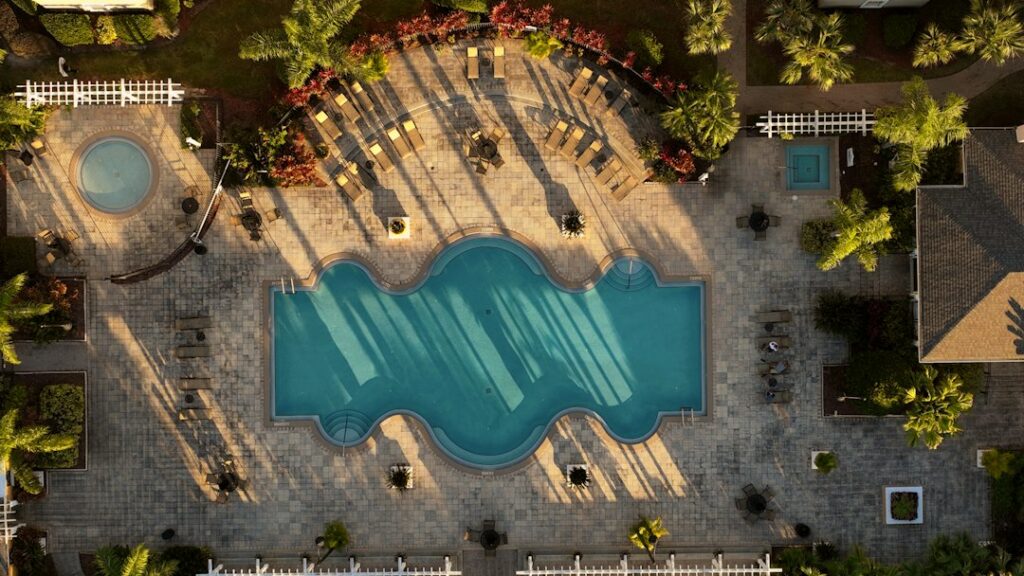
Pool Home vs. Community Pool
Not every buyer needs a private pool.
| Feature | Private Pool | Community Pool |
|---|---|---|
| Access | At your home | Shared amenity |
| Maintenance | Owner responsibility | Usually association responsibility |
| Privacy | Greater | Shared use |
| Direct operating costs | Owner pays | Generally incorporated into association costs |
| Customization | Owner may modify subject to codes/HOA | None |
If you expect to swim only occasionally, a community with a well-maintained association pool may provide the amenity without adding pool maintenance to your individual home.
Should You Buy a Home and Add a Pool Later?
Sometimes buying the right house and adding a pool later can make sense.
But do not assume the backyard can accommodate one.
Before buying with plans to add a pool, investigate:
- Lot dimensions
- Building setbacks
- Drainage easements
- Utility easements
- Septic system, if applicable
- HOA rules
- Impervious surface limits
- Tree restrictions
- Lake or wetland setbacks
- Equipment placement
Inside the City of Orlando, pool location, decking, equipment, fencing and drainage are all subject to local development standards.
A contractor should evaluate feasibility before you base the purchase decision on a future pool.
Questions to Ask When Touring an Orlando Pool Home
- When was the pool built?
- When was it last resurfaced?
- How old are the pump and filter?
- Does it have a heater?
- How old is the heater?
- Is it saltwater or traditional chlorine?
- Has the pool had any leaks?
- Are service records available?
- Was the pool properly permitted?
- Was the screen enclosure permitted?
- What safety features are installed?
- What does the current owner’s pool service cost?
- What does homeowners insurance cost for this property?
Frequently Asked Questions About Orlando Pool Homes
Are pool homes more expensive in Orlando?
They can be, but there is no universal Orlando pool premium. Value depends on the neighborhood, property, pool condition, equipment, lot and comparable sales. Buyers should compare recent pool-home sales in the same community.
How much does it cost to maintain a pool in Orlando?
There is no single monthly amount. Costs depend on pool size, equipment, heating, chemical system, service level and repairs. Reviewing the seller’s recent pool-service and utility records can provide a more property-specific estimate.
Where can I find pool homes around Orlando?
Private pool homes are available throughout the Orlando metro. Buyers often find them in established single-family areas such as Dr. Phillips, Windermere and Winter Park, as well as newer communities in southeast Orlando, Winter Garden and Horizon West.
Does Florida require a fence around every residential pool?
Not exactly. Florida law requires qualifying new residential pools to have at least one approved safety feature. A compliant barrier is one option, but approved covers, alarms and certain self-closing and self-latching door systems can also satisfy the statutory requirement. Local regulations may impose additional requirements.
Do Florida pool-safety rules apply to older resale homes?
The Residential Swimming Pool Safety Act specifically establishes requirements for new residential pools. Older pools may have been built under earlier rules. Buyers should review permit history, existing safety features and current insurance or local requirements for the specific property.
Does a screen enclosure count as a Florida pool safety barrier?
Not automatically. An enclosure qualifies as the statutory safety feature only if it meets the applicable pool-barrier requirements. Buyers should not assume every screen cage satisfies those standards.
Should I get a separate pool inspection?
It can be worthwhile. Ask what your standard home inspector covers, and consider a pool specialist when you want more detailed evaluation of the surface, plumbing, pump, filter, heater, automation and leak potential.
Does a pool affect homeowners insurance in Florida?
It can. Florida’s Department of Financial Services notes that some homeowners policies cover pools while others may exclude them or require additional coverage. Pools can also affect liability underwriting, so obtain a property-specific insurance quote before purchasing.
Can I add a pool to an Orlando home later?
Possibly, but feasibility depends on lot size, setbacks, easements, drainage, zoning, HOA restrictions and other site conditions. Buyers should have a contractor and the appropriate permitting jurisdiction evaluate the property before assuming a pool can be added.
Explore Orlando Pool Homes for Sale
A private pool can be one of the features you use most in a Central Florida home, but it also adds another system to inspect, insure and maintain.
The best pool-home purchase is not necessarily the newest or most elaborate pool. It is the property where the pool’s condition, ownership cost and backyard layout make sense alongside the home itself.
Browse current Orlando pool homes for sale, or use our full home search to compare pool properties across the surrounding Central Florida market.
If you want help reviewing comparable sales, pool condition and the total cost of a property, contact DJ & Lindsey Real Estate.
Common Questions
Frequently Asked Questions
Keep Reading
Related Articles

Ready to Make Your Move?
Let DJ & Lindsey Help You Find Your Dream Home
Whether you're buying, selling, or just exploring your options, we're here to guide you every step of the way. With deep local expertise across Florida's best markets, we'll help you make the smartest real estate decisions.
Get In Touch
Free Consultation
"*" indicates required fields